What You Can Do
Free Tibet is campaigning on the cases of 10 detainees and prisoners. Some of them were arrested for resisting the occupation, others for peacefully expressing their culture. What they have in common is that they have been shut off from the world, with the authorities refusing to reveal details of their condition and exact location.
We want to force the authorities to reveal the location of these prisoners and to push for their release. For each case, we have at least one action that you can do to put pressure on the authorities. We need them to hear our voices so that they know that the world is watching.
Wangdu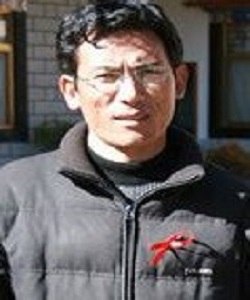
Wangdu was an HIV/AIDS activist in Lhasa. He was detained on 14 March 2008 during the protests against the Chinese occupation. He was later charged with espionage and sentenced to life imprisonment for sending an email about the crackdowns he witnessed on Tibetan protesters that year, which the authorities claimed was “intelligence” that threatened “the security and interests of the nation.” Wangdu was also accused of having established a group with Migmar Dondrub, Phuntsog Dorje and Tsewang Dorje to incite a “Tibetan people’s uprising” by distributing flyers and CDs.
According to Chinese officials, Wangdu is detained in Drapchi prison. His current detention conditions and wellbeing are unknown.
In 2012, witnesses reported that he was being kept in solitary confinement in the prison hospital, closely monitored by three police officers. He showed signs of injuries from beatings in prison. According to one source, one of his hands appeared to be broken and one side of his head had been shaved.
Wangdu had already served an eight-year sentence in prison from 1989 after protesting against martial law (military control over civilian life) in Lhasa, when he was a monk at Jokhang Temple. He was initially sentenced to three years but his detention was extended after he signed a petition with ten other political prisoners, denouncing the 17 Point Agreement, a document that China forced on Tibet in 1951 as a way of establishing Chinese rule over Tibet.
There have been no updates on Wangdu since 2012.
Take action for Wangdu – contact the Tibet Autonomous Region Governor, to demand his release, and Drapchi prison Director, to prevent any torture or ill-treatment!
Take action
Khenpo and Geshe
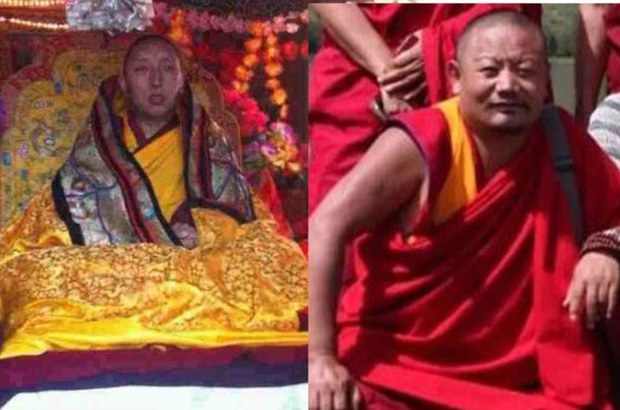
Geshe Orgyen (right) and Khenpo Pagah
Khenpo Pagah and Geshe Orgyen are senior monks from Chogri Monastery in Drango County, Kardze, eastern Tibet. They were both detained after participating in a mass prayer ceremony for the good health of the Dalai Lama, in January 2016 in their monastery. Tibetans gathered to pray for the Dalai Lama, who was undergoing surgery in the United States. Some shouted slogans calling for his long life and waved portraits of him, which is forbidden by the Chinese government.
Arrests did not occur the day of the ceremony but several days later. Khenpo Pagah, from Tsogo Township in Drango County, and Geshe Orgyen, from Tehor Township, were taken away in early February and their whereabouts remain unknown. Afterwards, security forces were deployed in Tehor Township to closely monitor Tibetans.
At the beginning of 2016, local authorities in Drango County clamped down on the display of pictures of the Dalai Lama in public places as part of a process of removing what they called “illegal publications”.
Take action for Khenpo Pagah and Geshe Orgyen – contact the Chinese Minister of Public Security and the governor of Sichuan Province. Urge them to reveal Khenpo Pagah and Geshe Orgyen’s location and release them!
Take action
Lobsang Gendun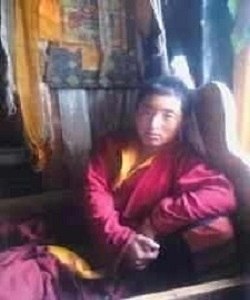
Lobsang Gendun is a monk from Drongsar monastery. He was 20 years old when he was arrested, after calling for the Dalai Lama’s long life and for Tibet’s independence, at official celebrations in Pashoe County marking the 92nd anniversary of the Communist Party of China. He was arrested the day of his protest, on 1st July 2013, and was subsequently sentenced to 10 years of imprisonment.
It is believed that he has been charged with separatism but this has not been confirmed, nor has his place of detention. He is being held incommunicado; his relatives and fellow monks have not received any information about or from him.
Lobsang Gendun has reportedly been tortured during detention and was unable to walk when Chinese police took him to the hospital in July 2013. After his arrest, security forces raided his monastery and his family home. Police broke doors and windows at his house and it is believed that pictures of the Dalai Lama were found in his room. Communications throughout the county were then cut.
Take action for Lobsang Gendun – contact the Chairman of the Tibet Autonomous Region. Urge him to reveal Lobsang Gendun’s location and release him!
Take action
Yeshe Choedron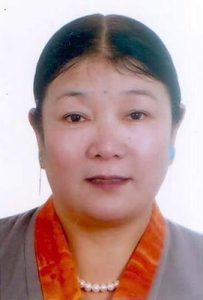
Yeshe Choedron is a retired medical doctor. She participated in large-scale protests in Lhasa in March 2008, leading to her being in detention that same month.
In November 2008 she stood trial, accused of providing “intelligence and information harmful to the security and interests of the state” to “the Dalai clique’s security department”. She was convicted of “espionage” and sentenced to 15 years imprisonment.
Yeshe Choedron is a mother and has not been able to see her children since 2008. Although she is believed to be in Drapchi Prison, there have been no recent updates on her condition, even though it is known that she has been in bad health.
Take action for Yeshe Choedron – Call on the Director of Drapchi Prison and the Governor of the Tibet Autonomous Region to release Yeshe Choedron!
Take action