Larung Gar
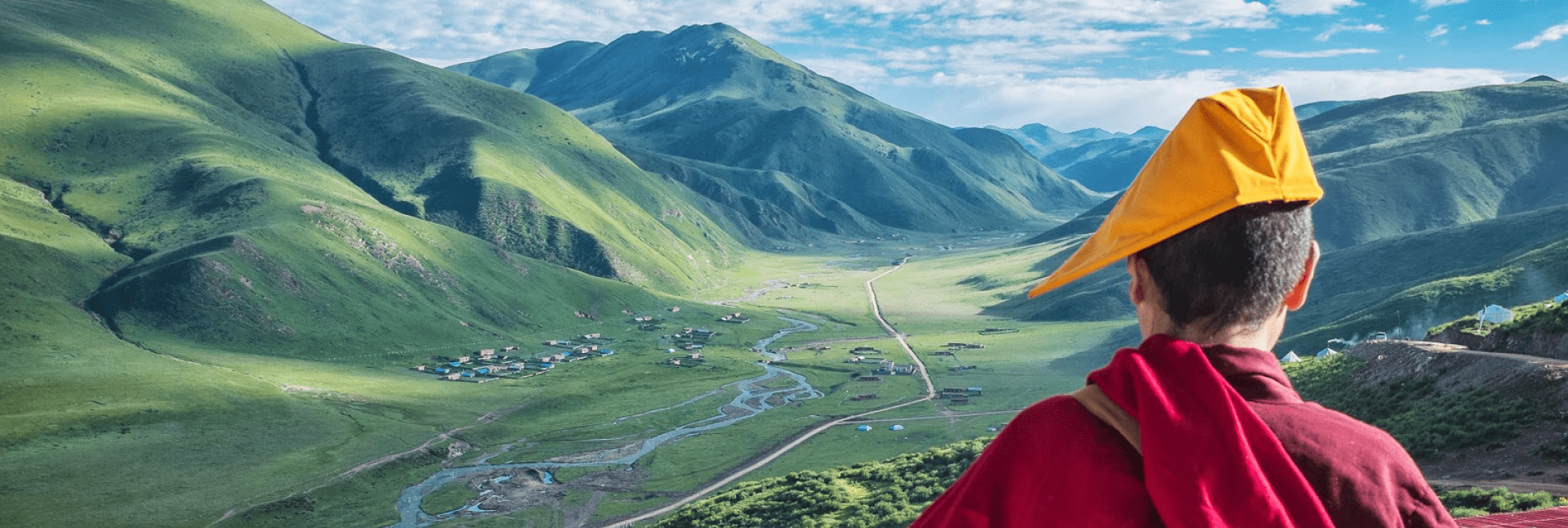
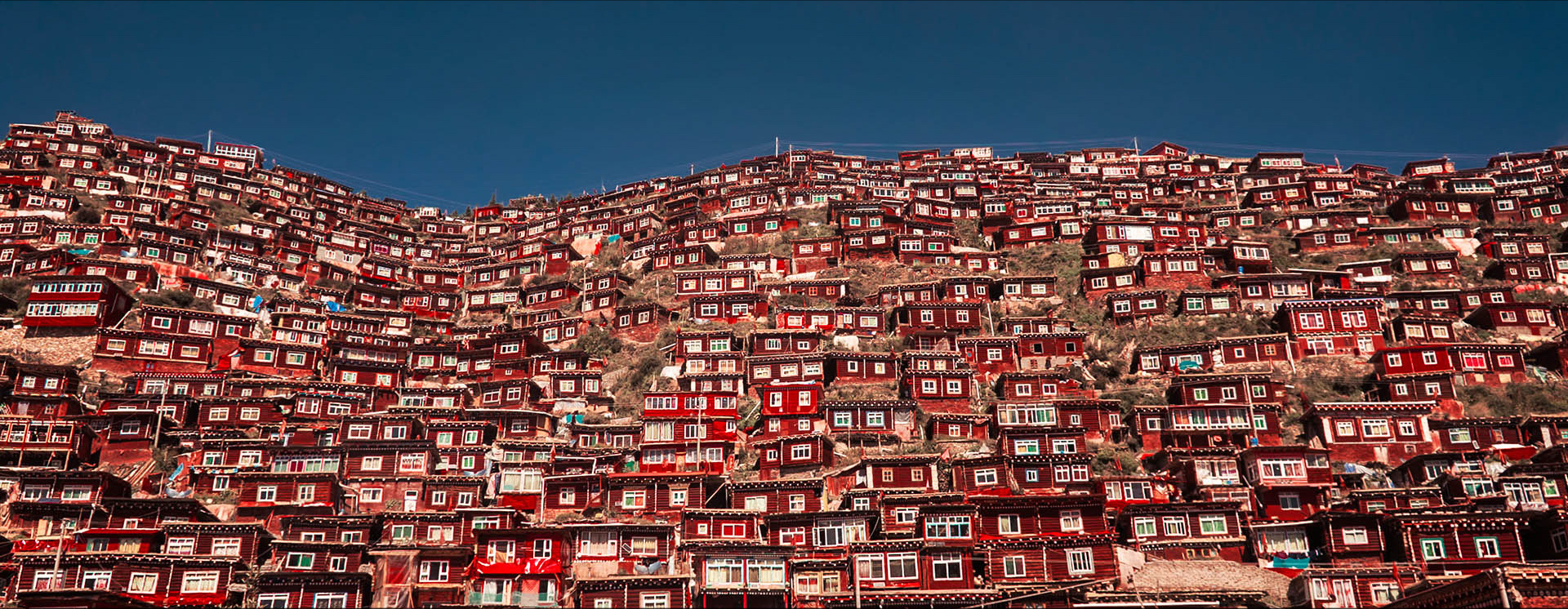
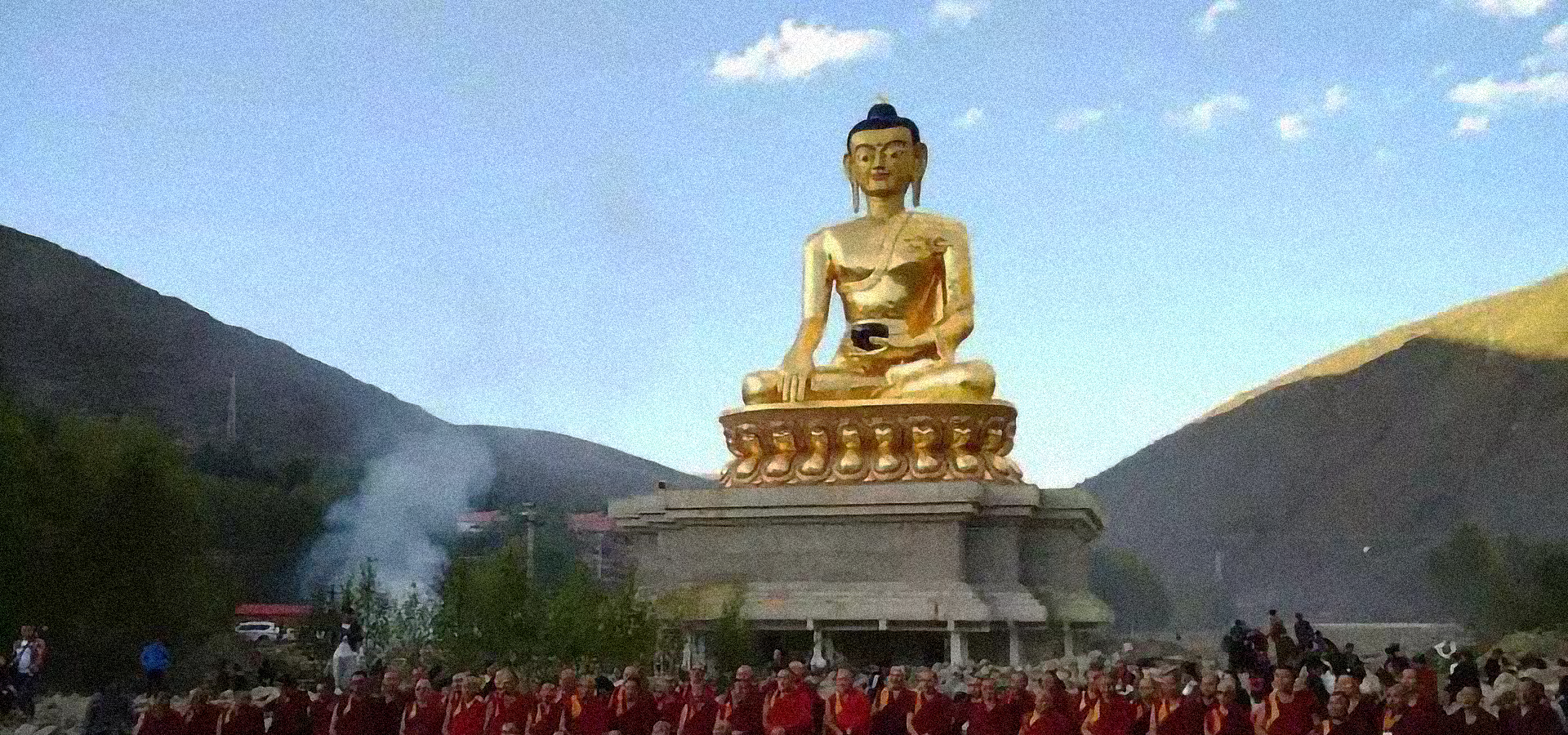
Spread among the hills in Serta County in Kardze, eastern Tibet, Larung Gar Buddhist Institute is the largest and one of the most significant sites in Tibetan Buddhism.

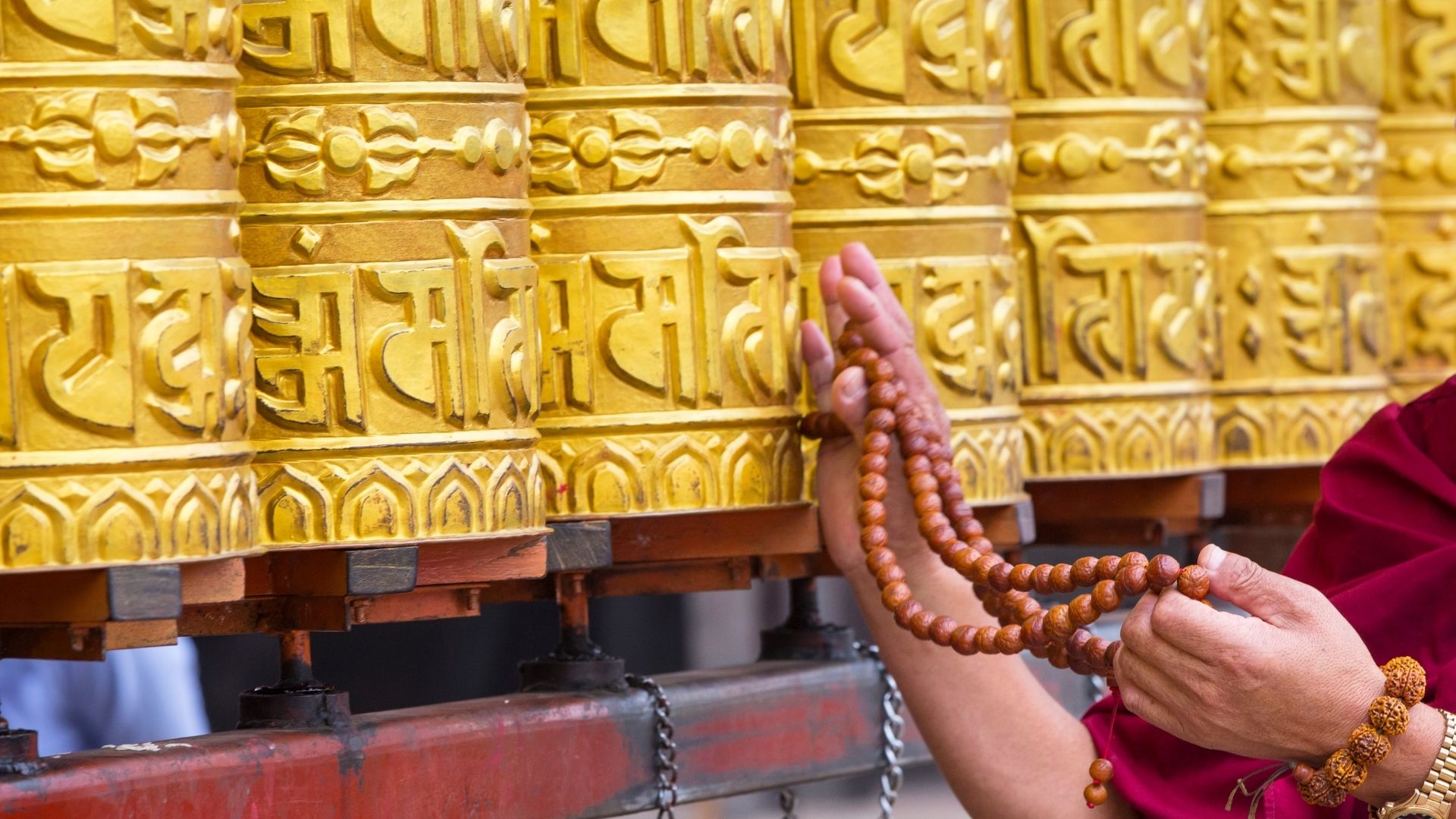
In Tibet, many people’s lives are dedicated to Tibetan Buddhism.
Religious customs are part of everyday life, from chanting mantras and prostrating in a local square to walking the ‘kora’ around a temple or sacred site.
The Chinese government sees Tibetan Buddhism as a threat and is trying to weaken Tibetans’ connection to it in order to weaken their Tibetan identity and strengthen Chinese control over Tibet.
Monks and nuns face restrictions on their practice and China’s military put on shows of force at religious events. Access to important pilgrimage sites is restricted and many sacred lakes and mountains have been dammed and mined without Tibetans’ consent.
Since 2016, Larung Gar – the biggest Buddhist institute in Tibet, and indeed in the world – has been the target of a major assault. Thousands of individuals have been evicted and thousands of homes demolished – and these removals continue today.
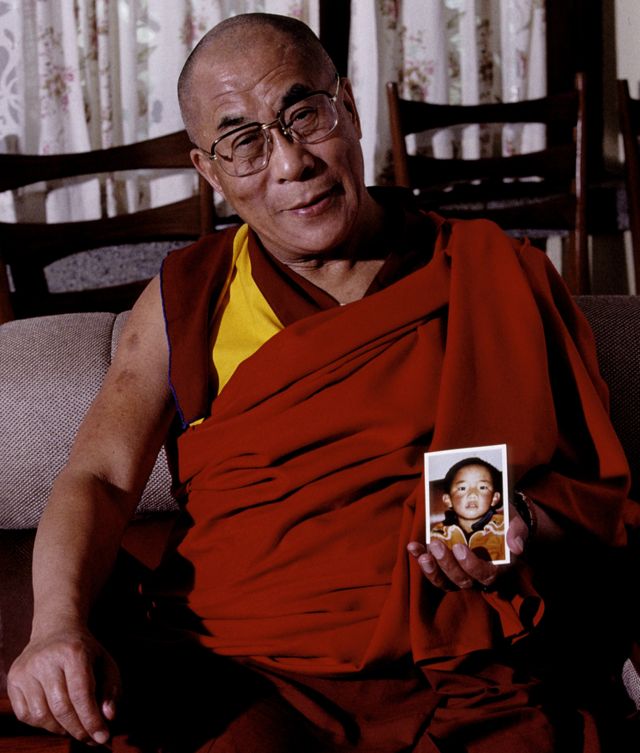
The Dalai Lama holding a photo of the Panchen Lama
The belief in reincarnation and the role of lamas – spiritual teachers – are fundamental aspects of Tibetan Buddhism. The Dalai Lama is the most senior figure in Tibetan Buddhism and is considered to be the reincarnation of Chenrezig, the Buddha of Compassion.
For generations, Dalai Lamas have also been the rulers of Tibet but the current Dalai Lama, the 14th, has given up any political role and is now a purely religious figure. After the brutal repression of protests against Chinese rule in 1959, the current Dalai Lama fled into exile in India followed by tens of thousands of Tibetans.
Because of the Dalai Lama’s central place in Tibetan culture and national identity, the Chinese government sees him as an enemy of the state and is trying to break the bonds between him and the Tibetan people. In most areas of Tibet, it is illegal to sell or even possess images of the Dalai Lama.
Another important figure in Tibetan Buddhism is the Panchen Lama. Tibetans refer to the Dalai Lama as the sun and the Panchen Lama as the moon.
In 1995, the Chinese authorities abducted six-year-old Gedhun Choekyi Nyima just days after he had been identified by the Dalai Lama as the new Panchen Lama. To this day, nothing is known about his and his family’s whereabouts or wellbeing. The Chinese authorities recognised a different Panchen Lama to attempt to strengthen China’s control over Tibet; Tibetans refer to him as the ‘Panchen Zuma’, or ‘false Panchen’.
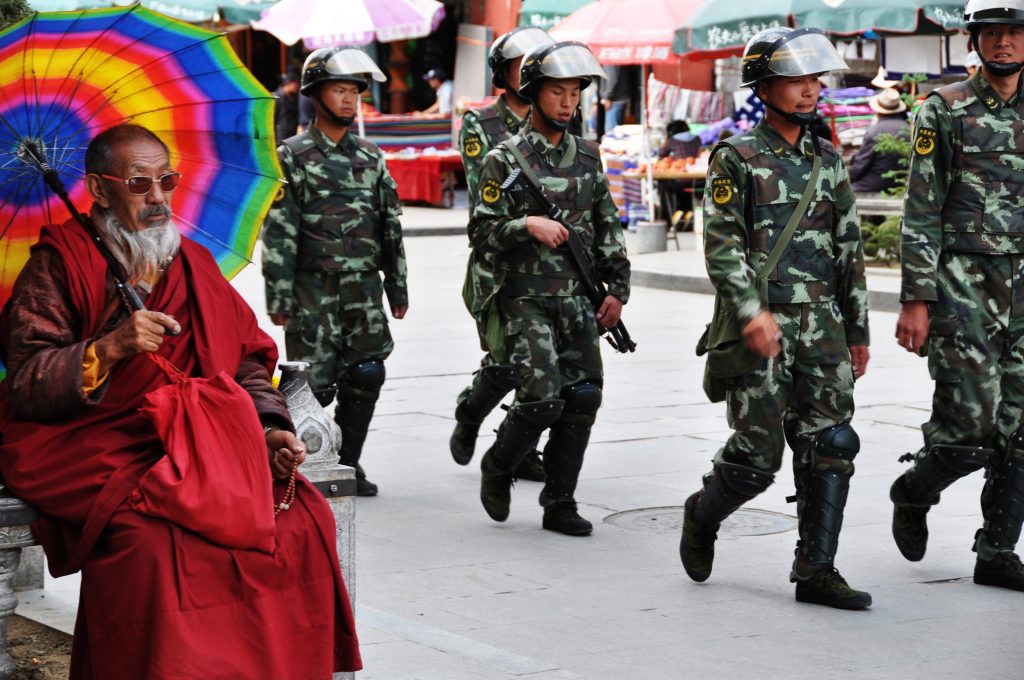
Monk in Lhasa with Chinese military marching past. (Photo: Prasad Kholkute)
Prior to China’s invasion, between 10% and 20% of Tibetan men were monks. Under occupation – especially during China’s Cultural Revolution in the 1970s – more than 99% of Tibet’s monasteries have been pulled down and the numbers of monks and nuns are strictly controlled.
Nunneries and monasteries are kept under the sort of tight surveillance normally reserved for terrorist groups. They are overseen by government-appointed ‘Democratic Management Groups’ and many have police stations situated nearby or even inside.
Because of religious restrictions and their status as community leaders, monks and nuns are often at the forefront of protests and resistance to China’s rule and as a result, many have been beaten, imprisoned and tortured. Many of Tibet’s most significant political prisoners are monks, such as local leader Khenpo Kartse and senior monk Tenzin Delek Rinpoche, who died in prison in 2015. Dozens of monks and nuns have set themselves alight in protest against China’s suppression of religious freedom and Tibetan culture.
Monasteries are often instructed to fly the Chinese flag and are assessed for loyalty to the Chinese government. Monks and nuns may be forced to participate in ‘patriotic re-education programmes’, in which they are required to read ‘patriotic’ literature and then tested on the contents. As part of the test, they must proclaim that Tibet is part of China and denounce the Dalai Lama – something which many Tibetans find deeply distressing. The penalties for refusing to participate or failing the programme include fines, beatings and expulsion from a monastery or nunnery.
With your support, we can keep the eyes of the world on China’s actions across Tibet. We can inspire others to take action. We can stand alongside Tibetans to stop China’s war on Buddhism.
Spread among the hills in Serta County in Kardze, eastern Tibet, Larung Gar Buddhist Institute is the largest and one of the most significant sites in Tibetan Buddhism.
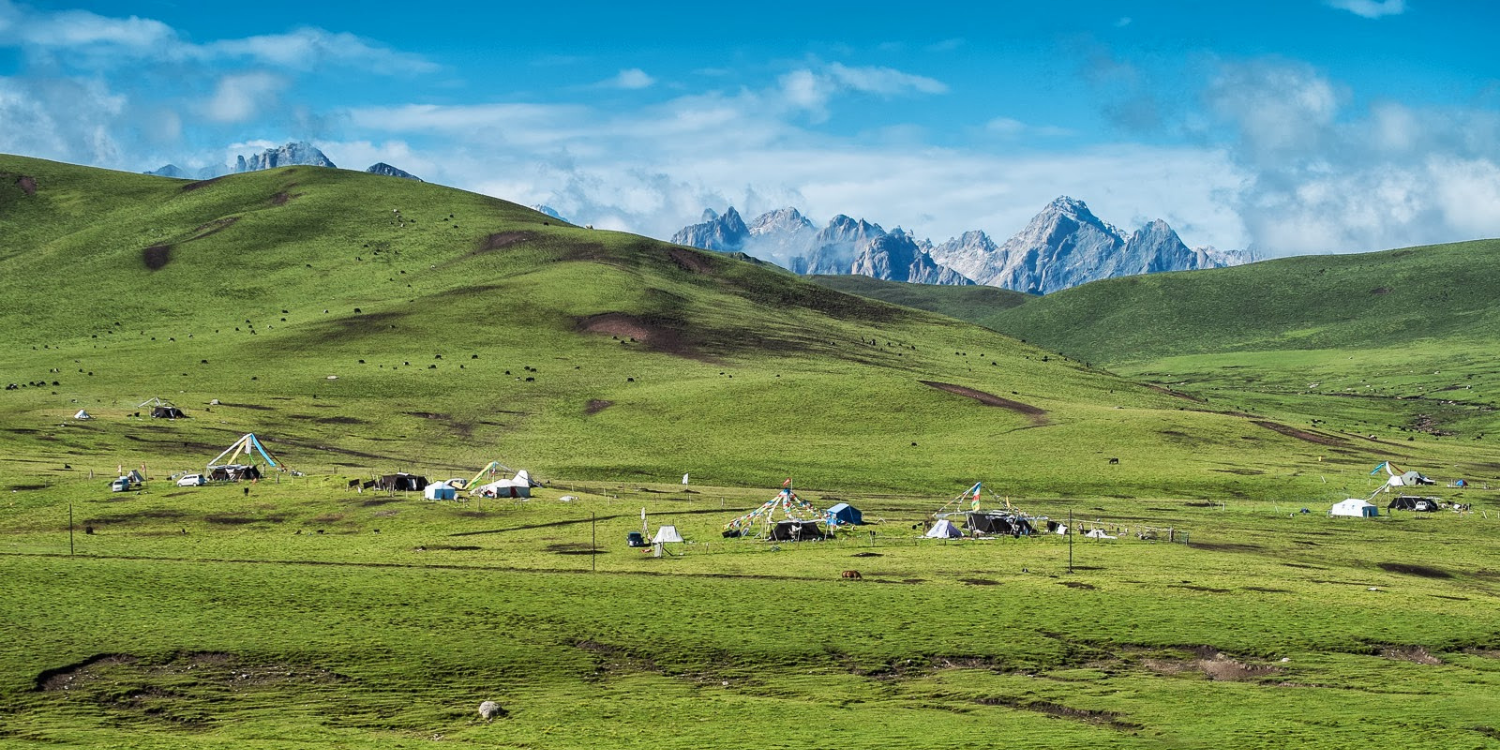
Nomads are being forced out of their ancestral lands, which they have farmed for centuries, and relocated to urban settlements. Their entire way of life is uprooted, and they receive little support from the Chinese government.
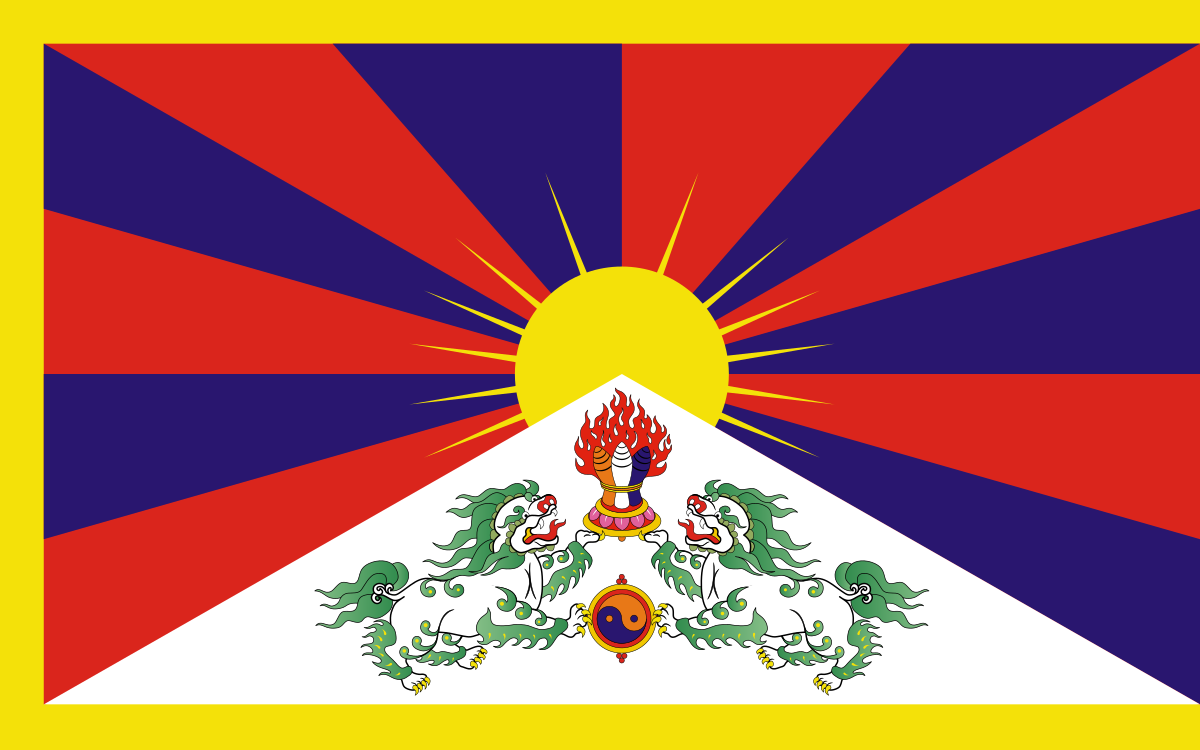
China has made possessing the Tibetan flag illegal. It is censored from media inside China. Meanwhile, Tibetans face arrest for owning, waving or flying their flag, or even having an image of it on their phone.